October 1, 2026
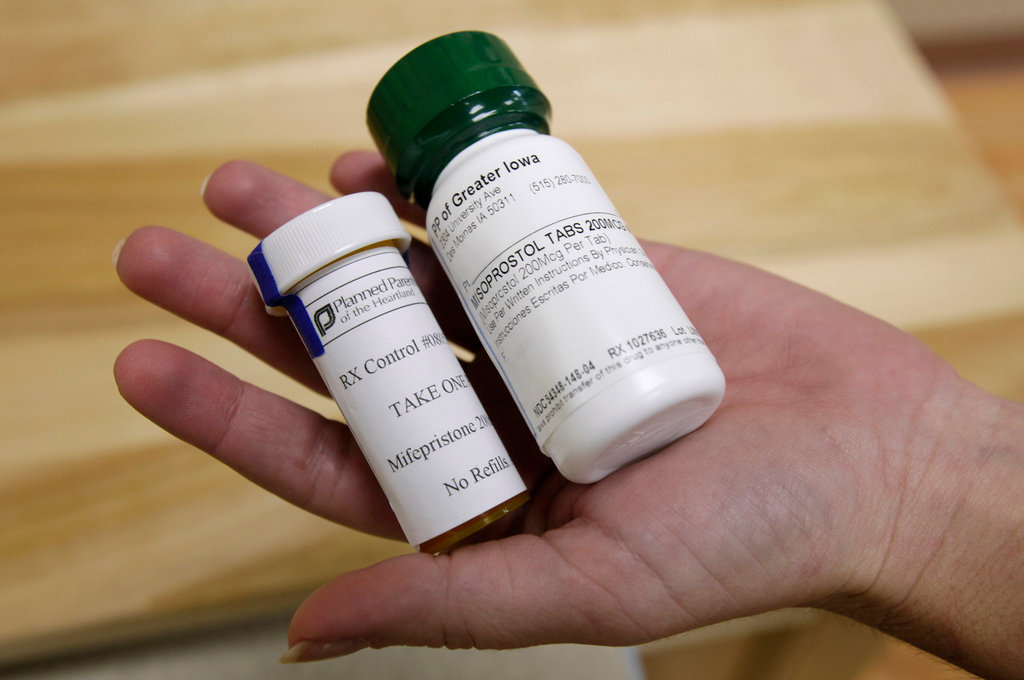
A panel of federal judges heard arguments Wednesday over whether prescribing rules should be tightened for a key drug used in the most common abortion method in the United States, one of several ongoing efforts to limit abortions four years after the U.S. Supreme Court allowed states to decide the issue.
The case before the New Orleans-based 5th U.S. Circuit Court of Appeals is one of three making its way through the courts as pro-life groups try to block providers in states where abortion is legal from sending drugs for chemical abortions into states where it is not.
The U.S. Food and Drug Administration also says it's reviewing the rules and could call for a change — and that the agency process should take precedence over court action.
At least 3 in 5 U.S. abortions are now obtained using a two-drug combination. At issue before the appeals court is just one: mifepristone.
Wednesday’s arguments were part of a case brought by Louisiana Attorney General Liz Murrill and Rosalie Markezich, who says she was coerced into taking abortion-inducing drugs. A survey conducted for the Society of Family Planning, which supports legal abortion access, estimates that between 770 and 900 women in Louisiana obtained abortions each month in 2025 by using pills prescribed online or by doctors or nurse practitioners in other states that have “shield laws” intended to protect those prescribers.
The three judges hearing the case are two nominated by Democratic presidents Barack Obama and Joe Biden and one nominated by Republican George W. Bush.
Three other three-judge panels on the 5th Circuit — one in this case and two in an earlier one — and two district courts have already agreed that rules for prescribing mifepristone are too loose.
But the Supreme Court unanimously rejected an effort to roll back availability in 2024 — not because of the core legal argument, but because the court found the pro-life groups who brought the challenge didn’t have legal standing to make it.
On Wednesday, lawyers for the FDA and mifepristone manufacturers argued that Louisiana also lacks legal standing. One of the judges, Stephen Higginson, questioned whether the FDA's role is a reason pills are flowing into Louisiana. “Those are state shield laws,” he said. “The government has nothing to do with the shield laws.”
Benjamin Aguinaga, Louisiana's solicitor general, said the state is impacted, though, because some women who use the pills seek treatment for complications and, he said, perhaps half also have state-funded Medicaid health coverage.
Another ruling from the 5th Circuit would not immediately change the landscape because the Supreme Court has also blocked changes to the prescribing rules until it sees the case again. Even if the FDA makes changes without court approval, such an action would surely be challenged.
Other GOP state officials are also challenging the FDA’s rules. The attorneys general of Florida and Texas have filed one lawsuit and the top government lawyers of Idaho, Kansas, and Missouri have another. Separately, Louisiana and Texas have attacked shield laws by bringing criminal and civil cases against some out-of-state providers.
Meanwhile, over the past year, federal judges in Hawaii and Virginia found that current FDA rules for mifepristone prescribing are too restrictive.
Abortion pills were already widely used before the Supreme Court overturned Roe v. Wade in the 2022 Dobbs v. Jackson Women's Health Organization case that allowed states to enforce abortion bans.
Currently, 13 states ban abortion at all stages of pregnancy. Another four do so after about the first six weeks.
Opponents say the shield laws in some Democratic-controlled states, along with the rules allowing mifepristone to be mailed to patients, have undermined the bans.
“This case is going to have a huge impact,” said Gabriella McIntyre, legal counsel at Alliance Defending Freedom, which is representing Murrill and the other plaintiff in the case. “The promise of the Dobbs decision was that states would be able to decide on their own how to regulate abortion.”
Pro-life groups who want to rein in pill access have been Trump's key supporters.
Pro-life groups have called on the FDA to settle the lawsuit with Louisiana and roll back prescribing rules to how they were before telehealth prescriptions were allowed. They also want the administration to enforce an 1873 “anti-vice” law to bar mailing the pills.
Some states, including Mississippi and Texas, have adopted laws with civil or criminal penalties for those who prescribe abortion pills.
The administration has been mostly quiet through the legal battles, even though the FDA is the defendant in the cases.
The FDA says it’s studying mifepristone’s safety and reviewing prescribing rules around the drug. But Trump’s latest nominee to head the agency, Dr. Heidi Overton, the deputy director of the White House Domestic Policy Council, has publicly criticized the agency for relaxing its prescribing rules for the drug — the most recent change coming in 2023.
One judge ordered the agency to provide a status update by Oct. 7, less than a month before the midterm elections in which control of Congress is in play. It's not clear how detailed an update might be — or when the full study could be completed.
Even if mifepristone access is curtailed, advocates say it won't end access to abortion pills.
The most common regimen for pills in the U.S. is a combination of mifepristone and misoprostol. Misoprostol, which is commonly used to treat stomach ulcers and has never been formally approved for abortion, can cause abortions on its own. According to the FDA label on mifepristone, the combination completes chemical abortion 97.4% of the time. Some studies have found misoprostol’s individual effectiveness at around 80% or higher.
Organizations that prescribe abortion-inducing drugs by telehealth for women who are in states with bans say they would shift to sending misoprostol alone if mifepristone could be dispensed only at clinics rather than at pharmacies and through the mail.
Share with others


