October 3, 2026
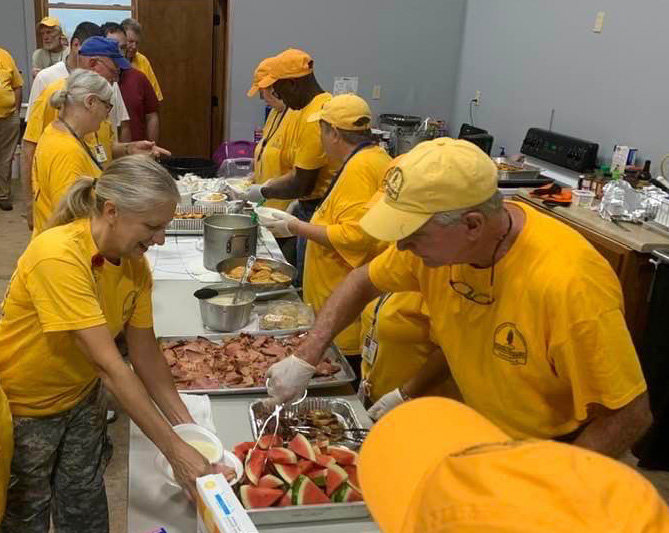
The Conasauga Baptist Association’s Disaster Relief unit in Georgia “specializes in the big, hard jobs,” according to Marshall Worley, who directs the association’s Disaster Relief ministry.
When Hurricane Katrina hit New Orleans in 2005, Worley decided it was time to help, and he’s never wavered in his commitment to Southern Baptist Disaster Relief efforts. Now, he not only directs the Disaster Relief unit for his association, but he is also the heavy equipment coordinator for Georgia Baptist Disaster Relief.
Because the Conasauga Association’s Disaster Relief unit owns and maintains heavy-duty equipment, such as skid steers and large chainsaws, they can handle massive jobs — jobs like cutting and hauling off toppled trees that measure more than three feet in diameter.
According to Georgia Baptist Disaster Relief director Dwain Carter, the support of associational Disaster Relief units like this one are extremely important. Associations, he said, often own the trailers and other equipment so vital to the effectiveness of Disaster Relief 'sministry.
But this isn’t the only benefit Southern Baptist associations bring to Disaster Relief efforts.
“Associations have boots on the ground,” said Darey Kittle, associational mission strategist for Conasauga Association.
Because of their local connections, associational leaders can effectively mobilize pastors and local churches to support Disaster Relief efforts.
“We’re better together,” Kittle said. “What we couldn’t do on our own, we can do through Georgia Baptist Disaster Relief. And, vice versa, what Georgia Baptist Disaster Relief couldn’t do, they can do through associations. So it takes both … to make it successful.”
Carter agrees, and he isn’t alone among state Disaster Relief directors to highlight the value of Southern Baptist associations for Disaster Relief's ministry.
“Associations are vital in what we do to stay connected with our churches,” Kentucky Baptist Disaster Relief Director Ron Crow told The Baptist Paper.
David Wells, who directs Texas Baptist Men’s Disaster Relief efforts, said associations not only own equipment important to relief ministry, but they are also able to open doors into communities that need practical help and gospel healing.
“That’s key for us,” Wells said. “When I go into an area that I’m not familiar with, I’ll ask the director of missions at the association what churches (in the area are available to help). … That association is vital.”
Leading an association on the Texas Gulf coast, adjacent to Louisiana, Jim Turnbo knows the devastating impact that disasters can bring to communities and churches. But he also knows the value of associational partnerships with Southern Baptist Disaster Relief ministries.
“We’re a coastal association that goes from the Sabine River all the way down to the Bolivar Peninsula, near Galveston,” Turnbo, executive director of the Golden Triangle Baptist Network, said. “So I have pastors who have been through multiple storms, who have rebuilt their churches numerous times.”
When Turnbo began at the association five years ago, communities were still cleaning up from Hurricane Harvey, which hit the gulf coast in 2017.
“We had Harvey,” Turnbo said. “Then we had Tropical Storm Imelda, which damaged several of our communities and churches. Then we had a chemical plant explosion that affected many communities. Then, in 2020 in the midst of COVID, we had two hurricanes. So we have been quite active.”
These experiences with disaster have only served to reinforce Turnbo’s commitment to invest in and partner with Southern Baptist Disaster Relief efforts.
“We are so familiar with what it means to be a disaster site that we’re aware of the need. There are times we need help,” he said. On the other hand, he added, “There are times we need to be the help for somebody else.”
Amid local disasters, Turnbo and other leaders at the Golden Triangle Baptist Network partner with local churches and with the two Southern Baptist Disaster Relief organizations in Texas to make sure no needs are overlooked.
“Our priority in a disaster,” he said, “is to help our churches and ministry leaders recover so that they can minister in their communities in response to the (ongoing) circumstances.”
Given his experience, Turnbo would encourage any association to connect with Southern Baptist Disaster Relief ministries in their states.
On the one hand, he said, Southern Baptist Disaster Relief provides “first-class” training for a variety of Disaster Relief-related ministries, from chaplaincy to chainsaw proficiency. On the other hand, when associations partner with DR, the churches in that association have ready-made opportunities to go on mission. “And anytime we give ministry responsibility to God’s people,” Turnbo said, “that’s a good thing.”
Additionally, Turnbo said, “the reality is that, at some point, it’s going to come home. At some point, there’s the tornado, there’s the fire, there’s the significant event where you live.”
The more your association is engaged in Disaster Relief, he said, “the better prepared you are to take care of mama and daddy, wife and children, neighbors — and to help your local church be the church in the midst of that circumstance.”
Share with others


