October 2, 2026
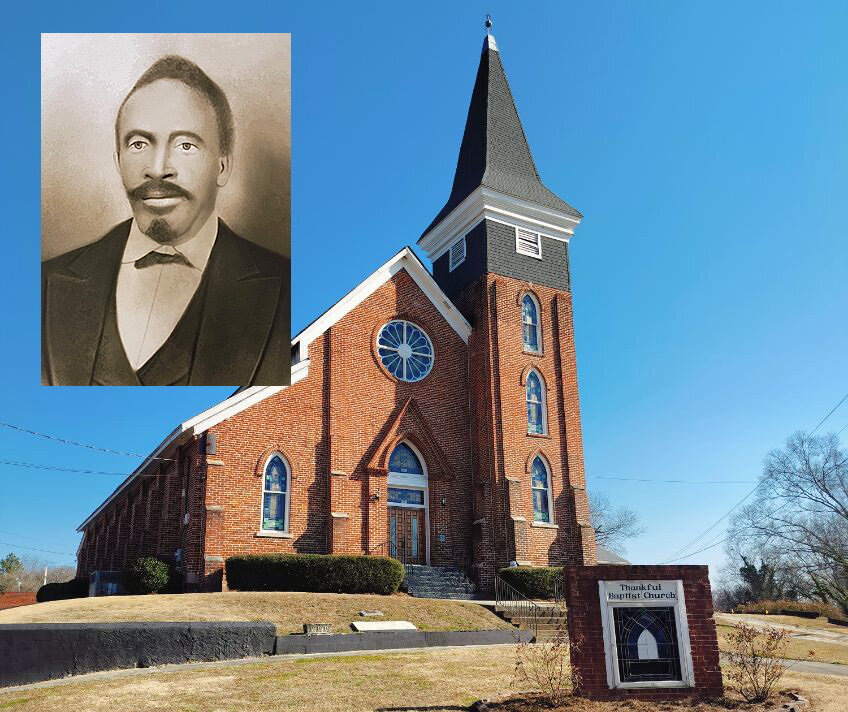
ROME, Ga. — Jefferson Milner was born into slavery on a plantation near Laurens, S.C., in 1820. When he died 75 years later in Rome, he left a legacy matched by few of any race. That legacy included being a pastor, church planter, educational pioneer, teacher, school superintendent, and early civil rights pioneer. He accomplished all these things while enduring the trauma of enslavement, including escaping death at the hands of a lynch mob. Because of his faithful life of service and influence across the region, he was honored with the title “King of North Georgia.”
According to a brief biography published during his lifetime, in 1888, he came to Georgia as a young boy with his master’s family. Eventually, he moved to what is now Cartersville in 1832, at the time of the Cherokee removal. He had been converted shortly before the move to Cartersville, during a camp meeting held in conjunction with the annual meeting of the local Baptist Association. That same year, he was baptized and joined the Pettit’s Creek Baptist Church (Cartersville Baptist after 1856). By the age of 15, he was preaching and was licensed to preach in 1835.
Enduring the trauma of slavery, twice in his early life he had wives who were sold and sent away. His biography stated that on one occasion, as he watched his wife and small son being carried away, “He turned away with great lamentation and weeping but all for naught-they were now gone-as he walked away, he cried out, ‘It is more than I can bear!’”
In 1857, having lost two previous wives, he married Martha Caten. They had six children, two of whom survived to adulthood. Today, according to his great-great-granddaughter Joi Aikens, there are more than 325 of his descendants scattered across the nation. In that same year, Milner began preaching once a month, 10 miles from Cartersville at the Mount Zion Baptist Church to a “congregation of 500.”
One Sunday in 1862, during the Civil War, he preached a sermon to the black membership of the Cartersville congregation, which worshipped in the church basement. It was based on the text, “If the son shall make you free, ye shall be free indeed.” His biography states, “the following Sunday he was brought into judgment for the doctrine he preached and was severely punished.”
According to oral tradition passed down in his family and the churches he pastored, a gallows was constructed. Typically, the person would have been beaten before being executed. Standing bloodied and beaten, when asked if he had any last words, he began to preach. When he was done, the mob was silenced and set him free.
His experience at the gallows undoubtedly enhanced his reputation, endearing him to the black community. One sermon had resulted in his arrest, and the second one set him free. In 1865, he was once again set free by emancipation and began a new chapter in his life. That year, he organized Shilo Baptist Church, composed of former slaves.
In 1867, he registered to vote, signing the registration by making his mark with an “x.” The following year, in the first general election following the war, he served on the Bartow County Board of Elections, certifying the results, ensuring the civil rights of the newly emancipated freedmen. That same year, he became the founding pastor of Mount Zion Baptist Church in Cartersville.
Milner, who was unable to read or write at the close of the war, began to promote the establishment of schools. In Cartersville, it began with an elementary school, where he eventually taught. He learned to read and write, most likely attending night schools which were offered for adults. In the following years, he would become a leader in establishing schools. He established and became the superintendent of industrial high schools, designed to teach skilled trades, in at least eight communities across the region.
In 1868, he moved to Rome and became the founding pastor of Thankful Baptist Church. After the loss of an early building by fire, they constructed a substantial brick structure in 1881 at a cost of five thousand dollars. It was quite a feat for a formerly enslaved and impoverished congregation to have accomplished less than 20 years after emancipation. The congregation grew to a membership of over 900 under his leadership. The brick building is still in use today.
His biography concludes with a summary of his life and ministry up to that point: “He has baptized thirty-five hundred souls, ordained sixty-seven deacons, licensed thirty-one preachers, ordained fourteen preachers, and has organized nearly every church from Acworth, Georgia, to the line of Alabama and Tennessee. In truth, he is the found and organizer of every church in North Georgia. He is a man of little or no education, very small in stature, of a wiry frame, eminently pious, profoundly great in character, and an eloquent divine.”
Jefferson Milner may have died in 1895, but the legacy of this former slave preacher lives on and still inspires in North Georgia. Freed from sin in 1832, freed from the gallows in 1862, freed from slavery in 1865, and freed from this mortal life in 1895, Jefferson Milner was “free indeed!”
Share with others


