October 1, 2026
Walking through the fellowship hall, grabbing a cup of coffee, and making his rounds, a pastor heads toward the hallway where groups are meeting on a Sunday morning. It’s not often he has this kind of time to enjoy a cup of fresh coffee, engage in relationships, and settle in the presence of the church before worship. Rounding a corner, he notices an empty room he thought was for a class they launched last year.
As a bivocational pastor, it’s challenging to keep up with everything, but he was sure they had launched a new class in the fall. He leans in to see a faithful saint smiling and asks where everyone is and who this group is for. The church member of 30+ years smiles and says, “This class is for young adults. We launched with a few last year, but there’ve been a few weeks like this—just me, some empty chairs, and extra time to pray with the Lord. Don’t worry, pastor; it’s OK! We’ll keep being faithful, and young adults will come too.”
Embarrassed. Upset. Frustrated. Defeated. What was a calm morning is now a flurry of emotions, worrying about the “wasted” time of a teacher and checking online for books to help reach and engage young adults. There must be an answer. What about starting a young adults’ service like the big church in town?
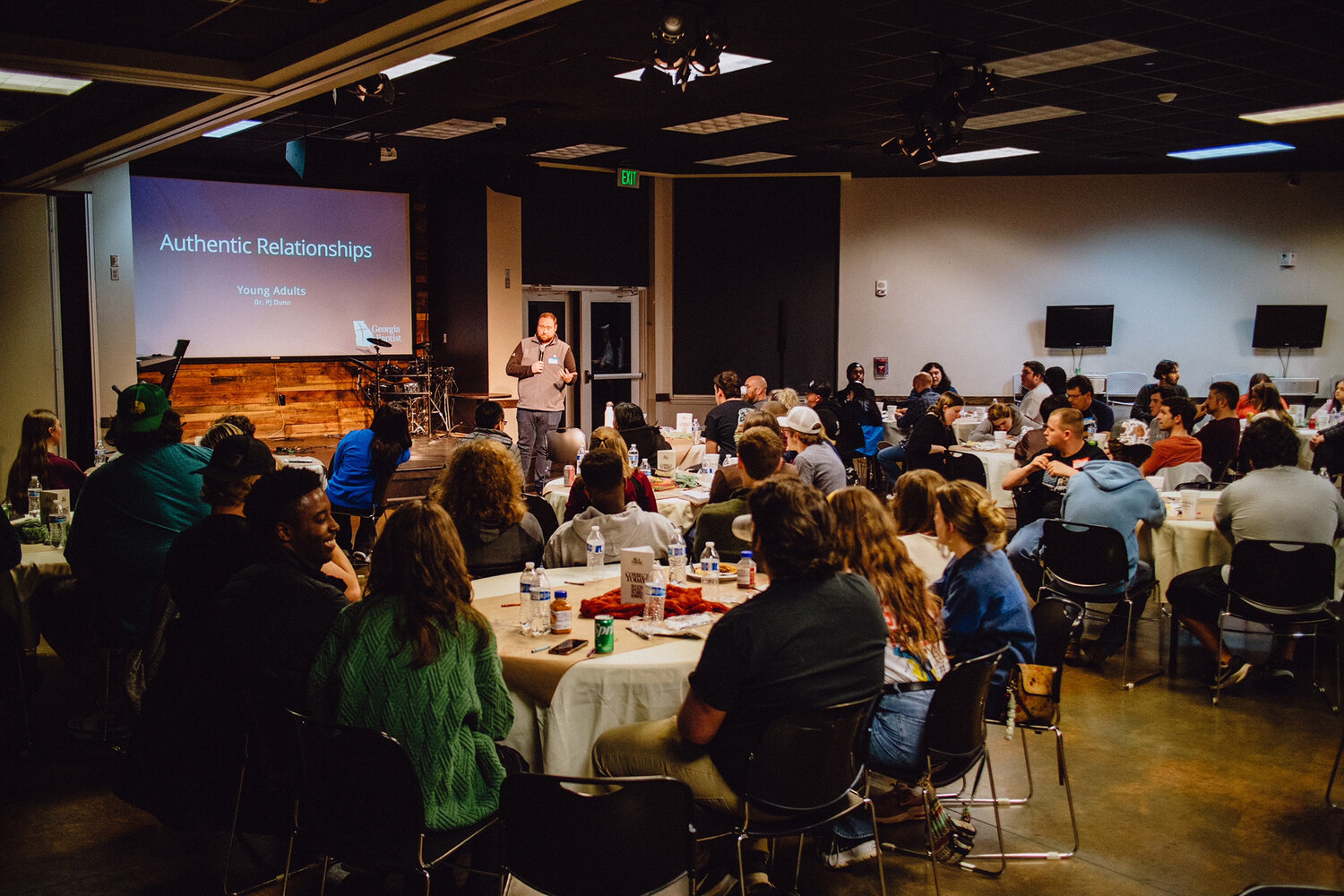
Church, it’s time for us to create gathering environments, not just physical rooms, for young adults to be noticed, named, and known. Here are a few ways to determine if it’s time for your church to have a separate young adult service.
Many churches struggle with creating a service specifically for young adults. It may look like adding a time on Sunday morning with a more contemporary worship style but not necessarily labeling it a service for “young adults.” Then there’s the content decision. Do you preach the same message? Or do you select a different topic delivered in a different method to engage a specific target? Who are young adults, and how would you adapt a service to reach them?
No matter how polished your new or existing service looks, remember: A separate time slot doesn’t necessarily mean a separate ministry. Healthy churches grow by creating space, but space should extend the mission, not splinter it. Whether you’re adding a young adult service to reach new faces or to handle the crowd, make sure it’s not a ministry apart, but a ministry at heart, woven into the fabric of your church’s disciple-making culture.
For us to stay focused on the way God uniquely calls each of our churches, we need a strategy, mission, vision, and values. We find these in Scripture with the Great Commission, visions of where the Lord is leading His people, the unique values of early churches, and Jesus calling them to refocus on their first love in Revelation 2 and 3.
Organizations like Lifeway’s Auxano and Corpus Vitae help churches rediscover these key principles to guide their decisions—such as deciding whether to start a young adult service or adjust a current strategy to engage young adults better. Before considering a service, align it with your church’s unique calling, not just an imitation of the ministry down the road.
Let’s take a look at the good and the challenging aspects and things to be aware of before launching a young adult service at your church. I recently reached out to several discipleship-focused churches in Georgia, where I serve as a church strengthening consultant. These churches are either currently hosting young adult services or considering adding young adult services. Here’s some feedback based on those responses:
Tailored teaching and worship
Young adults value worship that feels authentic, not just trendy songs. They crave an immersive environment and teaching centered on the realities of emerging adulthood and being complete in Christ.
Community building
Gatherings foster genuine community. Many young adults linger afterward for spontaneous fellowship, like meals together. Remember, 1 in 3 young people feel completely alone much of the time. They need spaces where they’re noticed, named, and known—3 things vital for relationships and discipleship.
Leadership opportunities
Young adults thrive when given real leadership roles like leading worship nights or serving in significant ways. Discipling young adults who can then disciple others will foster ownership and build leaders who remain connected to the church for years, ultimately fueling a lasting generational impact.
Outreach potential
A young adult service can reach people who might otherwise avoid traditional church gatherings and their specific days and times. Many young adults work weekends or have other commitments, making alternative times, such as Thursday nights, more appealing. If you launch a service, aim it at the community you’re not yet reaching in other environments.
Risk of isolation
A separate service can silo young adults from the broader church body, sometimes leading to “accidental” church plants if the group becomes too independent. Always start by aligning with your church’s mission, vision, strategy, and values to keep unity.
Shallow engagement
Some young adults see services as purely social rather than spiritually transformative. Without intentional focus on worship and discipleship, gatherings drift off mission. When well-aligned, a young adult service becomes an extension of the church’s discipleship pathway, not a competitor.
Varied life stages
Young adults may be in college, working full-time, living with parents, single, dating, engaged, divorced, single parents, or even widowed. They’re not a one-size-fits-all group. Know who they are before launching a service. Focus on making disciples who make disciples, and you’ll hit the target every time.
Volunteer burnout
Separate gatherings can strain leaders and volunteers. Don’t launch a service as a “one-hit wonder.” Ensure your facilities, strategy, volunteers, and excellence are ready to sustain it.
Churches considering a young adult service should weigh these real-life pros and cons carefully before making a decision. There are ways to create gatherings for young adults without a weekly or bi-weekly gathering. Combine your discipleship pathway or strategy with on-ramps for young adults to engage. It may resemble a quarterly or, at most, a monthly gathering of young adults that aligns all your church’s goals.
Sustainability needs to be at the forefront of our young adult engagement plan. Volunteers, church facilities, and budgeting constraints are all realities of the local church, regardless of its size.
Consider avoiding the addition of a young adult service until you have clarity on your mission, vision, and values that foster a culture of discipleship within your church.
You may need to focus on small groups before adding larger gatherings to connect young adults in a meaningful way that allows them to be noticed, named, and known, rather than just attending a large gathering.
___
Dr. PJ Dunn is a regional discipleship consultant for North Georgia of the Georgia Baptist Mission Board. He can be reached at pdunn@gabaptist.org. This article appeared on Lifeway Research.
Share with others