October 2, 2026
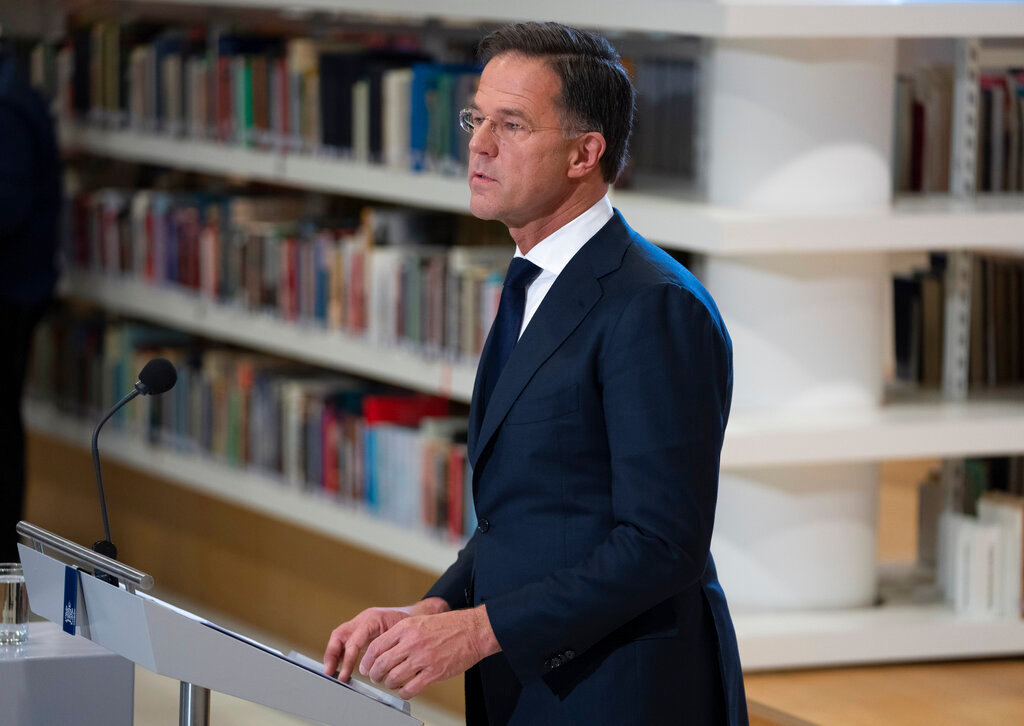


THE HAGUE, Netherlands (AP) — Dutch Prime Minister Mark Rutte apologized Monday on behalf of his government for the Netherlands’ role in slavery and the slave trade, in a speech welcomed by activists as historic.
“Today I apologize,” Rutte said in a 20-minute speech that was greeted with silence by an invited audience at the National Archive.
Rutte told reporters after the speech that the government is not offering compensation to “people — grandchildren or great-grandchildren of enslaved people.”
Instead, it is establishing a $212 million fund for initiatives to help tackle the legacy of slavery in the Netherlands and its former colonies and to boost education about the issue.
Rutte apologized “for the actions of the Dutch state in the past: posthumously to all enslaved people worldwide who have suffered from those actions, to their daughters and sons, and to all their descendants into the here and now.”
Describing how more than 600,000 African men, women and children were shipped, "like cattle" mostly to the former colony of Suriname, by Dutch slave traders, Rutte said that history often is “ugly, painful, and even downright shameful.”
Rutte went ahead with the apology even though some activist groups in the Netherlands and its former colonies had urged him to wait until July 1 of next year, the anniversary of the abolition of slavery 160 years ago and said they had not been sufficiently consulted in the process leading up to the speech. Activists consider next year the 150th anniversary because many enslaved people were forced to continue working in plantations for a decade after abolition.
The prime minister's address was a response to a report published last year by a government-appointed advisory board. Its recommendations included the government's apology and recognition that the slave trade and slavery from the 17th century until abolition "that happened directly or indirectly under Dutch authority were crimes against humanity.”
The report said that what it called institutional racism in the Netherlands “cannot be seen separately from centuries of slavery and colonialism and the ideas that have arisen in this context.”
Dutch ministers fanned out Monday to discuss the issue in Suriname and former colonies that make up the Kingdom of the Netherlands — Aruba, Curacao and Sint Maarten as well as three Caribbean islands that are officially special municipalities in the Netherlands, Bonaire, Sint Eustatius and Saba.
In Suriname, the small South American nation where Dutch plantation owners generated huge profits through the use of enslaved labor, the largest opposition party, NDP, condemned the Dutch government for failing to adequately consult descendants of enslaved people in the country.
“The NDP therefore expresses its disapproval of this unilateral decision-making process and notes that the Netherlands is comfortably taking on the role of the mother country again," the party said in a statement.
The year starting July 1, 2023, will be a slavery memorial year in which the Netherlands “will pause to reflect on this painful history. And on how this history still plays a negative role in the lives of many today,” the government says.
The Dutch first became involved in the trans-Atlantic slave trade in the late 1500s and became a major trader in the mid-1600s. Eventually, the Dutch West India Company became the largest trans-Atlantic slave trader, said Karwan Fatah-Black, an expert in Dutch colonial history and an assistant professor at Leiden University.
In 2018, Denmark apologized to Ghana, which it colonized from the mid-17th century to the mid-19th century. In June, King Philippe of Belgium expressed “deepest regrets” for abuses in Congo. In 1992, Pope John Paul II apologized for the church’s role in slavery.
Share with others


