October 1, 2026
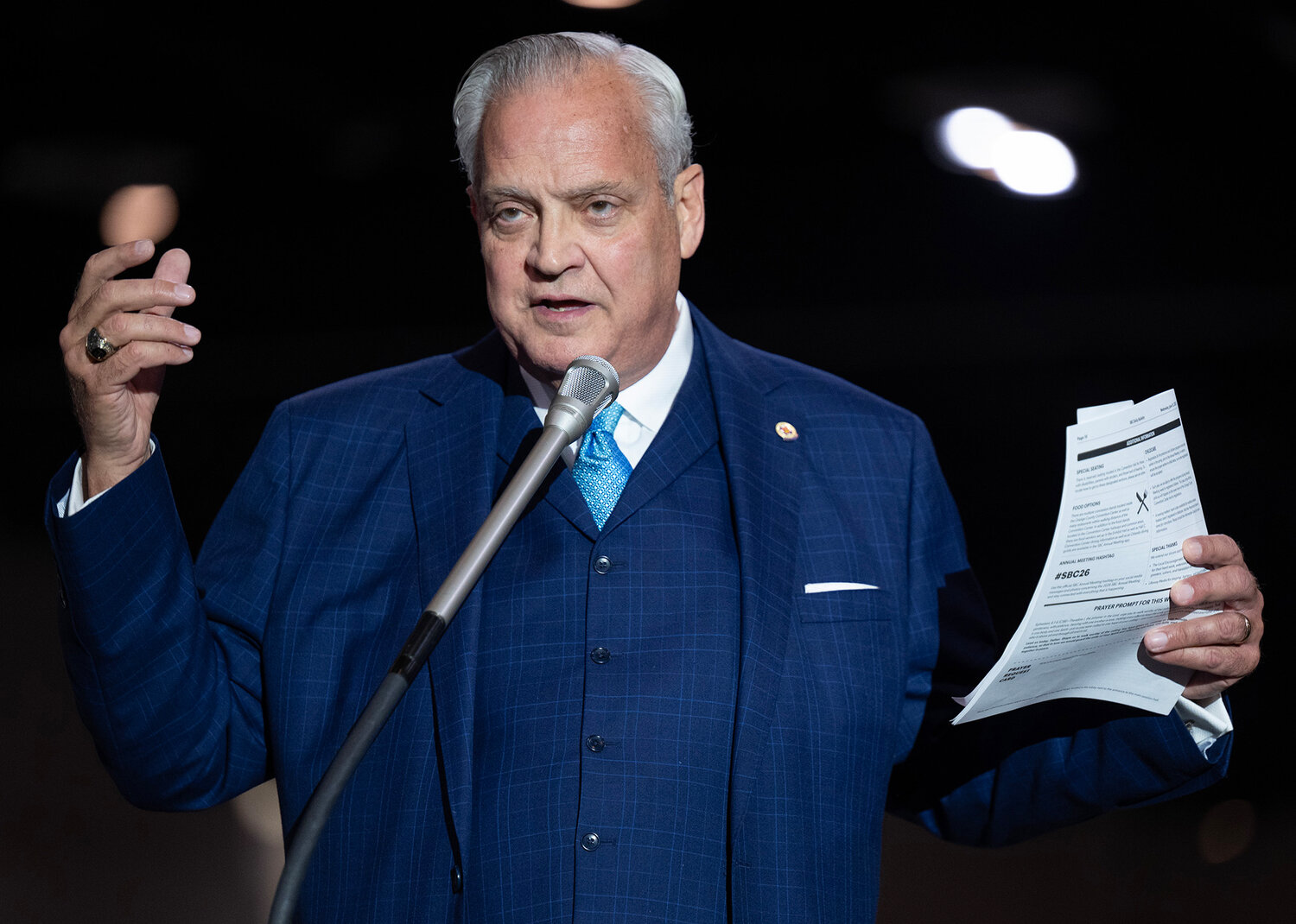

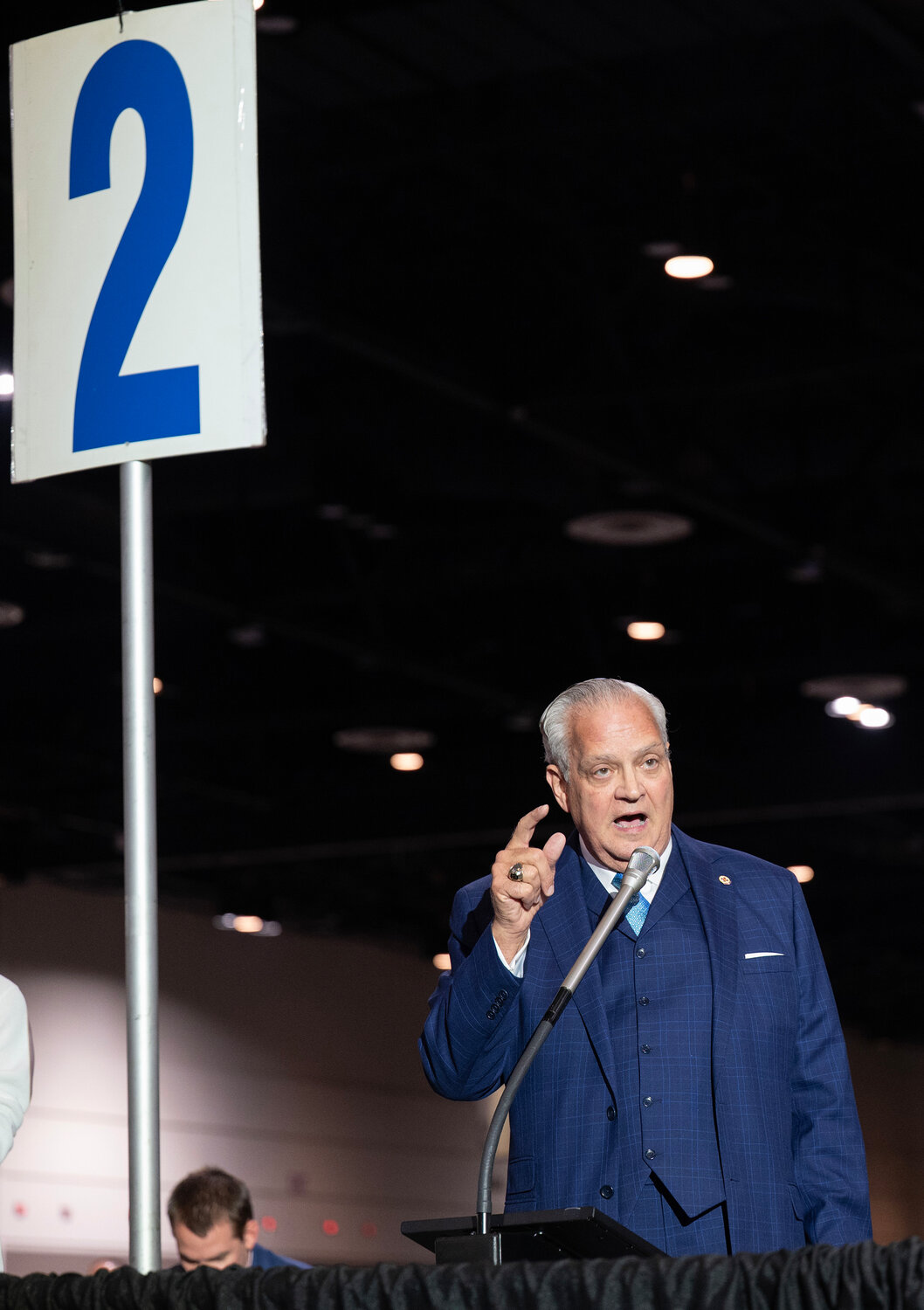



ORLANDO, Fla. — Southern Baptist messengers overwhelmingly approved the “Truth and Unity” amendment proposed by Southern Baptist Theological Seminary President Albert Mohler on Wednesday. The constitutional change is meant to clarify how cooperating churches understand the office and function of pastor, elder, and overseer.
The amendment received 6,028 votes (74.66%) in favor and 2,026 votes (25.09%) against. Twenty ballots were disallowed.
The vote came one day after messengers approved Mohler’s motion to suspend Standing Rule 6, which normally requires motions to amend the SBC’s governing documents to be referred first to the Executive Committee for review and then reported back to the following annual meeting. Suspending the rule allowed messengers to consider the proposal during this year’s meeting in Orlando rather than waiting until 2027.
Mohler’s amendment clarifies that a cooperating church does not “affirm, appoint, or endorse” a woman serving in the office or function of pastor, elder, or overseer, specifically including preaching to the assembled congregation in a pastoral capacity.
Mohler revised the original language of his amendment before the annual meeting. The initiall wording referred to women serving in the office or function of pastor, elder, or overseer by actions “such as preaching to the assembled congregation.” The revised version replaced “such as” with “specifically.” The change was intended to narrow the language after some Southern Baptists expressed concern that the original wording could be read to restrict a broader range of ministry activity by women.
Opening floor discussion as the maker of the motion, Mohler said the amendment’s language was modeled in part after the 1689 Baptist Confession, “where the office and function of the pastor are clearly delineated.”
Mohler said the amendment reflects other recent efforts to codify that only men serve in the role of pastor, but also specifies that “the key central function of preaching the Word of God to the gathered assembly is limited to men by Scripture.”
He also appeared to address concerns that the amendment could be used to broaden the definition of pastoral function beyond preaching.
“We know what we’re talking about,” Mohler said. “We’re talking about the pastor of churches and … the preaching of the Word of God. When it comes to the office, comprehensive. When it comes to the function, specified.”
Messengers heard arguments both for and against the amendment before the vote.
Doug Mize, pastor of First Baptist Church in Greer, S.C., spoke against the amendment, saying the SBC already has a process that works for addressing churches with women serving as lead pastors, co-pastors, or preaching pastors.
“What we have already works,” Mize said.
Mize said Southern Baptists have consistently acted when churches were found to have women serving in those roles, and he argued that the Convention’s position is already clear in the Baptist Faith and Message.
Mize warned that the amendment would go beyond what is needed and said the Convention should remain consistent in applying its existing standards.
Colin Smothers, a messenger from First Baptist Church of Maize near Wichita, Kan., spoke in favor of the amendment, saying the proposal would bring needed clarity to the SBC Constitution.
“This amendment is not complicated,” Smothers said. “The need for it is not complicated.”
Smothers said the amendment is faithful to Scripture and to the Baptist Faith and Message, which he described as the doctrinal foundation for Southern Baptist cooperation.
“We need clarity, and it provides clarity and truth and unity,” Smothers said. “We need it now.”
Smothers then called the question, closing the debate and sending the amendment to the messengers for the vote.
Because amendments to the SBC Constitution require approval by a two-thirds vote in two consecutive years, Wednesday’s vote marks the first of two required approvals. The amendment would have to be approved again at next year’s annual meeting before becoming part of the SBC Constitution.
Share with others


