October 2, 2026


Long before the first Europeans set their eyes on the north Georgia mountains, the Cherokee roamed the wild and beautiful land. Reminders live on through the names of communities, rivers and mountains such as Curahee, Ellijay, Chestatee, Chattahoochee, and Cohutta. One of those now-forgotten sites was the Tinswattie Mission Station located near the junction of the Amocolia Creek and the Etowah River. It was the first Baptist church in northwest Georgia and eventually became the first Baptist church in what is now Oklahoma.
In 1818, just a few years after the (national) Triennial Baptist Convention was organized to support missions, the first mission to the Cherokee was established. It was the Valley Towns Mission Station located a few miles north of the Georgia border in North Carolina. Missionaries from that station soon began establishing preaching points at Cherokee villages in north Georgia. Before this time, various preachers, primarily from the Sarepta Baptist Association, preached as they had occasion to the Cherokee in Georgia.
The Tinswattie mission was established within the bounds of Georgia in 1821. Duncan O’Bryant, a licensed minister, was appointed superintendent of the Tinswattie Mission Station and School in the Cherokee Nation, Georgia. This work was established by the Sarepta Baptist Missionary Society and supported by the Triennial Baptist Convention. This work became the center of Baptist work among the Cherokee in Georgia for 10 years.
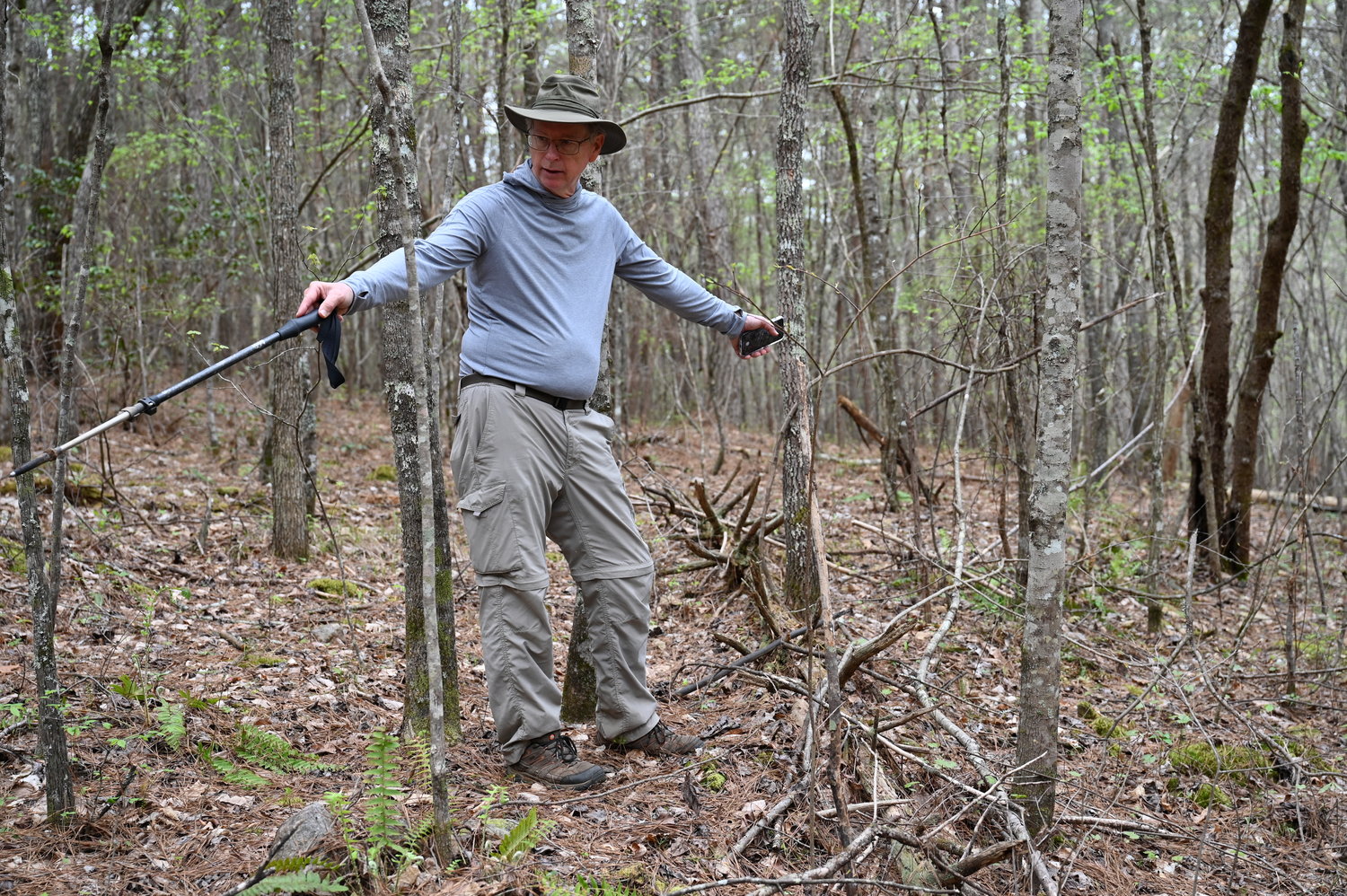
The Tinswattie Station was located deep in the hardwood forest of north Georgia in what is now the Dawson Forest about six miles from Dawsonville. Its proximity to the waterways and the Federal Road, which ran through the Cherokee Nation from Athens to Chattanooga, Tennessee, meant it was easily accessible. The river and road were major highways across the Cherokee Nation.
The Cherokee had adopted many Western practices. Most in Georgia lived in cabins and many had both Cherokee and Western names. A written version of the Cherokee language had been developed. The Cherokee Phoenix newspaper was printed in both Cherokee and English. Intermarriage between the white race and Cherokee was common, although the only whites to live in the Cherokee Nation without permission were the spouses of the Cherokee. Many of the Cherokee were very often slave owners as well.
The mission school was the foundation of the early ministry opening the door to the Cherokee nation. The school provided instruction in reading and writing in the English language, the Bible being a principal text. Math and other life skills were also taught.
The mission station was also a preaching station where, along with O’Duncan, other preachers, some on a regular basis, visited to preach. They included Littleton Meeks and James Reeves, founders of the Chattahoochee Association, Jesse Mercer and Adiel Sherwood who were founders of the Georgia Baptist Convention, Evan Jones and Humphrey Posey, both associated with the Valley Towns Station in North Carolina, and Jesse Bushyhead, a native Cherokee preacher from North Carolina.
A description of the station in 1831 listed five structures: a schoolhouse, a double cabin, a stable, corncrib, and a smokehouse. Most likely all the structures were cabins constructed from massive poplar trees which were plentiful across north Georgia. The schoolhouse would have also served as the church meeting house. In time, other branches of the school and church were established.
In 1825, four years after the mission was established, O’Bryant was ordained to the ministry and the Tinswattie Church was formally organized. When the church gathered for worship, services were conducted in the English and Cherokee languages and three races were usually present. The Cherokee, including Deacon Moses Parris, whites, and African American slaves owned by the Cherokee. Two of those slaves, Brother Daniel and his wife Nancy, were baptized in March 1824. Later it is recorded that Daniel “sometimes preached” and exhorted. Soldiers were often in attendance at services as well.
In the fall of 1826, the church applied for membership in the Chattahoochee Baptist Association, which had been organized only six months earlier. The church reported 26 members in its first report to the association, and its location was listed as “Cherokee Nation.” Duncan O’Bryant became active in the work of the association, which in turn helped support the Tinswattie Mission Station.
O’Bryant developed a monthly preaching circuit in the Cherokee Nation. On the first Sunday he was at the Ragsdale house, on the second at Tinswattie, on the third at the schoolhouse at Hickory Log Town, and on the fourth Sunday he preached at the Thomas Clyne house.
During the 1820s many in the state of Georgia began pressing for Cherokee removal, especially after gold was discovered in the Cherokee Nation in the late 1820s. Georgia Baptists were divided on the issue of removal. Most missionaries were opposed. Especially vocal were missionaries with the Valley Towns Station located just over the Georgia line in North Carolina. In Georgia, several missionaries from other denominations were arrested because of their opposition to removal after the state passed laws making it easier to remove those who disagreed with removal.
Increasingly throughout the decade the Cherokee and missionaries were harassed. This included the Tinswattie Church. Laws were passed to disenfranchise the Cherokee within their own boundaries. The Cherokee Phoenix reported harassment during a baptismal service which was being conducted by O’Bryant. Georgia Guard troops interrupted the service by riding their horses into the creek while shouting that their “horses needed to be baptized.”
Facing increasing pressure, several families affiliated with the Tinswattie Church choose to move to “Arkansas Indian Territory.” In 1831, others from the church decided to join them on what would be known as “The Trail of Tears,” arriving in 1832. In that year, the U.S. Supreme Court sided with the Cherokee for having sovereignty over their lands. In the end. other branches of the government ignored their ruling and continued with efforts to remove the Cherokee and other tribes west. In time this would include the use of force.
By 1831, Pastor O’Bryant, his wife Martha (Whitehead), and his children had been living and working among the Cherokee for ten years. They requested permission, as required from the federal government, to make the move west with the Cherokee. The family was not allowed to be embedded with the Cherokee on the trail but closely shadowed them, moving from Georgia to Arkansas Indian Territory, the land which had been set aside for the resettlement of eastern tribes.
The church had formally requested dismissal from the Chattahoochee Association before moving west. The band settled in the town of Piney, Arkansas Indian Territory. Piney was the last supply stop for those entering "Indian territory." The church adopted the new name of Liberty Baptist. It was the first Baptist Church located in the Arkansas Territory, this portion of which later became Oklahoma. This church was the first Baptist church in northwest Georgia, one of the earliest in Arkansas Territory and the first in what became Oklahoma.
Two years after their arrival, at age 48, Duncan O’Bryant, the first Baptist missionary to the western Cherokee died, leaving a widow and nine children remaining in the home, a grieving church and the legacy of a faithful mission pioneer who worked among the Cherokee in two states.
Eventually, the resupply point was moved from Piney and the town went into decline. Several missionaries followed O’Bryant but none remained long, and the church eventually disbanded. The congregation scattered, settling in other churches, not to be reunited again until eternity.
The Tinswattie Mission Station location in what became Dawson County, Georgia was abandoned and lost to time, swallowed up by the Dawson Forest. The church in Oklahoma scattered and all that remains in Piney is the tombstone of Rev. Duncan O’Bryant (1786-1834), which is the oldest marked grave in the state.
The work of the Tinswattie Mission Station helped lay the foundation for the ongoing work among Native American people that continues in places like Oklahoma today. It was the first concerted effort of Georgia Baptists to do cross-cultural missions and today that work continues with other language works across the state. The forest may have swallowed up the physical evidence of the work, but the results live on in Georgia, Oklahoma and beyond. Only time and eternity will tell the full story of the impact of the Tinswattie Mission to the Cherokee.
___
Charles Jones is a Southern Baptist historian, retired pastor, and newspaper columnist.
Share with others


